
Careers
Most job seekers …
search for jobs on L inkedIn, apply to jobs online, and send their resumes across to generic email addresses hoping for a response.
On the other hand, the inspired job seekers … make connections. They reach out and connect with the companies they admire even if there is no job posting. They make connections between their past work and the role they want to fill. They connect the dots of their past experience and how relates to their passions. Most of all they connect with people, not just to get the job but because they want to form real relationships.
Most of us have tried both methods. I did in my recent job search as well.
In today’s world, it’s easier than ever to go online and apply, but it’s more important than ever to truly reach out and connect.
Pulling a Hat out of a Rabit
 In most cases, people try to pull a rabbit out of the hat.  That’s a problem that is very difficult to solve, and has the allure of being magical.  On the other hand, have you ever heard of anyone try to pull a hat out of a rabbit.
Sounds impossible I know. Â I haven’t tried doing it either.
But maybe sometimes, it’s worth working on a problem that hasn’t been solved before. Â Sure it’s risky, but the reward is also exponentially bigger if it actually works.
The safest thing you can do is pick a path that everyone would choose But maybe greatness starts, by choosing a path that is the scariest.  Changing up the problem.  Turning the reality backwards.  Trying something that nobody else would.
Just a thought.
A month in at Winston & Strawn
 Just about a month ago, I started my new job at a large law firm in Chicago, Winston & Strawn.  The time has definitely flown by.
In general, the legal market is heating up.  Lots of my friends have gotten calls from recruiters.  More corporate roles than litigation roles but in general many people I know are being solicited.
I didn’t leave my firm due to a random call since I had a recruiter friend I’d know for a bit.  But I did go through the process and I decided to join the firm in a pretty niche role, unlike many of the other opportunities for  young lawyers.
In general, I came here to support the growth of two brand new groups (with primary support for one group initially). Â A borrower’s side finance group and a technology transactions group.
For the former, I help represent companies and entrepreneurs in lending and other types of financing transactions. Â More often than not these are high-growth portfolio companies of Private Equity firms, but in general the types of companies are pretty broad. Â We help them negotiate agreements with the banks who make the loans as well as help explain and document the entire process of the transaction.
For the latter group, the work stream is more general but the industry is more specific.  In general, I help represent 1) technology companies in a full range of activities, including raising money, exit, IP, general matters and also 2) non-tech companies who undertake certain tech-based activities such as licensing, joint venture agreements, etc.  3) Finally we also help represent investors in those companies, which could be angel or venture investors.
I’ve been on a few projects and deals thus far, and everything has gone smoothly. Â One lesson I’ve learned for a second time now, is that it does take time to get fully integrated, like it would anywhere. I’ve had a few interesting things going already but I know there is a whole lot more to come over the next year. Â Once a few interesting things start popping up, I’ll do my best to share any lessons learned along the way.
One thing I like about the role (and sought out) is that I am part of a small team, since I really just work with the one person in each group.  In a big firm it can be easy to get lost, so I purposely sought out working with micro-teams.  The benefits here are very clear – a smaller heirarchy, few people you rely on, easier to have discussions, and more speed and innovation than you could have in a big team.  This means that work can happen faster, feedback can be better and communication with the client can be more seamless.  It’s also good because there’s more alignment with workstream and scheduling leading to greater happiness of the team members.
My one piece of advice to anyone reading, is to seek that out. Â Ever smaller teams where each person has ever more responsibility.
Stay tuned to hear how things go!  I am excited for the new beginning.

Revive the Dream: April Session with Teach for America and Josh Anderson
 Just a few weeks ago, I organized and hosted the April session for Revive the Dream.  Our 2013 Fellows were lucky to spend the evening with Josh Anderson, a long-time Executive Director of Teach for America. The topic of the evening was talent in the education field.
We kicked off the session discussing Josh’s background as well as the reading. To prep for ourdiscussion, I sent a few articles to the group in advance of the session.
1. Mckinsey study:Â Closing the Talent Gap
2. New Schools study: Principal Effectiveness
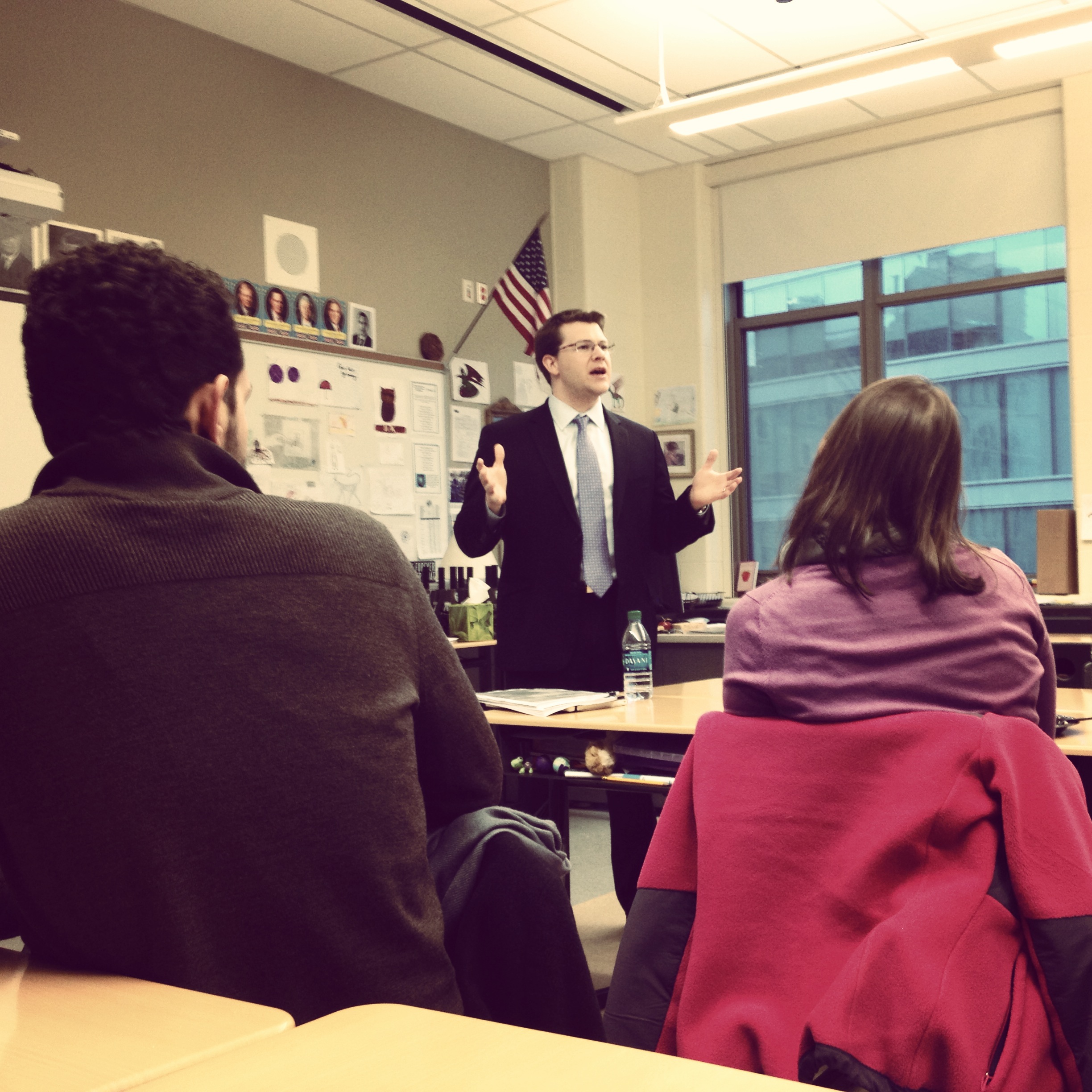
The discussion around talent in the education space is always hot topic. On one hand everyone knows about the importance of having great teachers and inspiring leaders in the education space. After all, strong leaders can often change everything for students, especially those on the cusp.  Students who don’t have enough resources at home. Students who might be behind a grade or two. And students who need someone to ignite the fire within them.
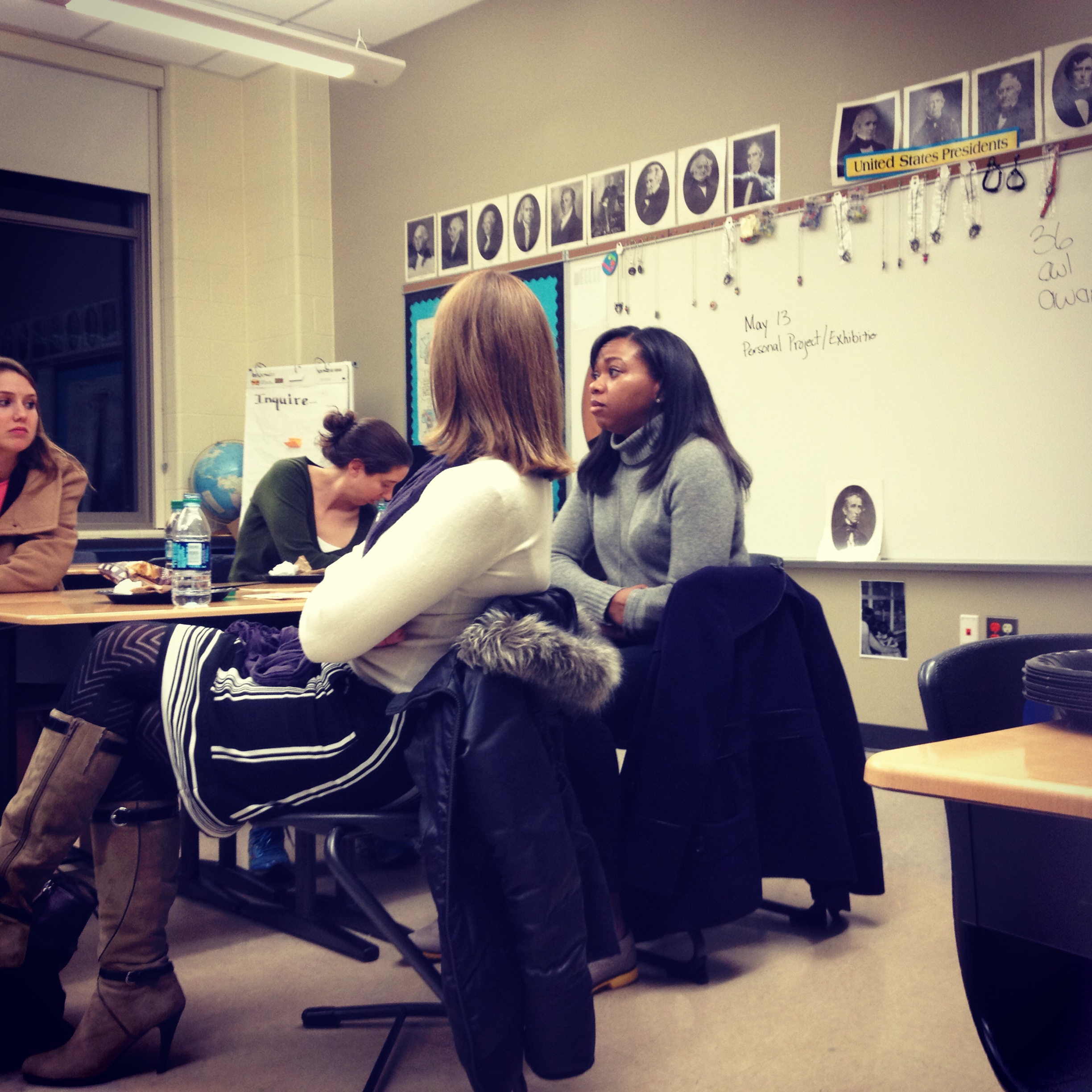 That said, the incentives to enter the education space, especially as a teacher aren’t always great. Not only is the pay lower than a majority of other fields, but the prestige is also lower. Furthermore, the work can be hard and grueling and at times it feels like you can’t have an impact if you’re in a big school sytem.
On the other hand, we can look to countries like Finland that have figured out the dilemma. Countries who attract and retain the most promising people to enter into teaching programs.  Countries that not only pay them well but also provide them with a platform to make change. One program that does that in the US is Teach for America. They recruit the best and the brightest undergrads to teach in underserved schools but the program’s main criticism is that the teachers rarely stay in the field and in the profession. We addressed that and much more in our discussion with Josh.
 Thanks to people like Josh, who are working on these issues not just in Chicago but beyond Chicago as well. And Josh/TFA, thanks again for supporting the RTD program.
Are you eating the marshmallow?
 There was a famous study done at Stanford University over 30 years ago. In the study, children were left alone in a room with a marshmallow. They were told that if they didn’t eat it, they would be given another one in fifteen minutes. What do you think you would have done if you were left in the room at age 5?
If you watch the video (below), the reactions of the kids are pretty entertaining. Some kids wait while other kids eat the marshmallow. Meanwhile, some kids played with the marshmallow and licked it, and one kid pulled out the inside to eat and then put the rest of the marshmallow back together.
The study traced these kids for 30 years after the study was done, and here is what they found. The kids who didn’t eat it were found to significantly more successful than the group who ate the marshmallow.  They had higher SAT scores, got into more famous colleges, and had better marriages. The results were statistically significant.
One thing the study would like you to take away is that it is useful to delay gratification for 15 minutes.  Something that successful people have to come to grips with early.
Think about it.
Like taking a really hard class in college in order to take better electives and get better majors later.  Learning how to study contract law or Torts inside on a beautiful day because 1L grades in law school are really important. Taking more interesting yet lowering paying jobs early in your career or becoming an entrepreneur earlier in your career understanding what it will lead to more opportunities 5 to 10 years later.  Or even taking two years out to go to business school even though it’s costing you two years of salary in the short term. Because in the end you’ll be much better off.
The part that interests me here is that people from lower socio-economic backgrounds are at a disadvantage during the test.  In part because their journey tends to have a higher percentage of delays of gratification (or no gratification) than their peers growing up. This means kids who don’t ever have as much in front of them may be less likely to pass up on something when they finally have it. And kids who have been let down might have the idea that the person will come back and give them the second marshmallow. Practically speaking maybe they’ve never seen a time when taking less money made sense or when taking two years off to pay to go to school made sense, because they’ve always lived paycheck to paycheck. Or because their lives have always been unstable or filled with “failure”, they can’t rely on future promises from other people. This is why many of these folks opt out of higher loan payments for college and couldn’t imagine turning down a job in corporate American to start a business.
From the study, four ideas quickly come to mind:
- More often than not, it’s best not to eat the marshmallow.
- We have to figure out ways to help those who haven’t had as many marshmallows as kids to still not eat it too quickly.
- Sometimes it might be best to let people keep the marshmallow, even if they don’t eat it – and maybe decide later. This is still delaying gratification.
- On the other hand, in some cases it might be best to eat the marshmallow. What if you don’t want a second one or if you could find a another in under 15 minutes?
What about you? What’s your marshmallow right now, and are you eating it? If so, are you sure you should be?
See below for a video of kids who took part in the study.
Finding the edge
 In my Saturday yoga class, our instructor started the class by mentioning the importance of finding your edge. It reminded me of one of my old posts as well as got me thinking about the importance of edges.
In yoga one of the most important parts of practice is finding your edge. That means understanding just how far to go into a pose. Â Because if you don’t go far enough, then you won’t be challenged, you won’t get the full stretch, and as a result you won’t get the opening that you need. On the other hand if you go too far, that increases the possibility of pain and injury. Â And it’s more likely than not that you won’t make it through the full class. Somewhere between these two points is the perfect balance:Â your “edge.”
In our professional lives, we have the same opportunity. Â We can find the edge to make sure we can put our best work in the world. Â By working harder than ever to attain our wildly important goals but knowing when to pull back and avoid getting in over our head. By understanding many new projects we can work on in our jobs before quality slips. Understanding when to make something perfect or when good enough is enough and to just be done.
With more information and more possibilities than ever before it’s more important than ever to understand our edge and not go further. Â If we find it, then we’ll get better and one day the edge will be further and further out than we ever imagined. On the other hand if we never find it, then we won’t move at all. Â And not only will we be stuck, we’ll also be left behind while the edge goes further and further out.
Just a thought.
New beginnings
 People all over the world crave new beginnings. But ironically, most people also do everything they can to avoid them.
The lawyer who slaves away at her job for an extra few years because she likes her salary and doesn’t know what to do next. The middle manager who is comfortable with the day to day routine which he thinks he can’t find anywhere else. Or the aspiring journalist who chooses to stay at a big company instead of working in the small town in Iowa for the chance to finally make it on air. This is because new beginnings are hard and uncertain.
But new beginnings are also the best opportunity you have to change everything. They give you a sense of hope and rebirth. They remind you that more in the world is possible if we just look up. And they remind you how good you are the moment you break out of your routine.
That’s why we celebrate them on new years and new birthdays.  It’s why we get excited to start over in school again, or start a new job after school. It’s what makes entrepreneurs excited to wake up each and every day.
The ability to do something for the first time. To chance to tackle the problem that everyone else said would not work.
Every day in yoga, we approach our practice the same way: with a beginner’s mind. We start every class in “childs pose†and we take our first breath and put our feet down on the mat for the first time. You don’t know how class will go. And sometimes you feel sore, tired, and nervous you might not finish. But every day, you take the first breath, concentrate and more often than not, you not only make it through the hard part, but you also make more progress than you ever imagined. That’s why so many people keep going back.
In short, new beginnings sometimes give you the opportunity to change everything.
Meeting my readers
 I don’t do it often as I want, but I really enjoy meeting my readers.
I’ve had the chance to meet many of them. In Chicago, Atlanta, Phoenix, New York and the Bay. But also in countries like Kenya.
Today, I had the chance to meet one of my favorite readers. We’ve been trying to meet up for a few weeks and it finally happened.
He just graduated college and had a lot of really great energy, not to mention questions about the world. He came prepared with a list of questions, but we didn’t get to most of them.
I think that meeting my readers remains one of the best ways to help hear more about the things students and professionals are thinking about and what their stories are. What they think about work, how they think about grad school and education, and what impact they want to make in their lifetime.
It also helps me hear about the things they fear. Â The fear of making sales calls, fear of getting rejected and fear of failing at what they do. Â And so I like to talk a lot about how to overcome that. Â We come up with plans so they can see a path to figuring out how to make it more likely that they will succeed.
But here’s the real secret. Â The hard is part isn’t defining the path or coming up with a plan, that’s the easy part. Unfortunately, it’s the part most consultants and advisors focus on. Â The hard part is doing the scary thing of taking a stand and sticking to the path. Â And so that’s where I like to focus. And it made for a really fun conversation today.
If any of you are interested in chatting, please let me know. I’d love to hear from you.
But before you  write, check out Education Matters Project. Most people I talk to tend to want to support the cause by sharing their story about why education matters to them.
Nothing is for everyone
 You know this but you ignore it every single time. Â And you always find out the hard way.
If you’re fundraising for Catholic Extension in Chicago, you have to ask yourself, why does it matter what the atheist next door thinks about your phone strategy?
If you’re a marketing executive at Target, why does it matter what loyal shoppers at Neiman Marcus think about your new products?
Or if you’re applying to college from the poorest schools in one of the poorest neighborhoods in the world, then why are you trying to please the admissions committees from colleges who don’t care about your story.
We all know this but we always seem to forget, that nothing is for everyone.
Think about it. The vast majority of people in the world have never sat in a Starbucks and never used an Android. Likewise the vast majority of people in many parts of Asia do not have indoor plumming.  The numbers show this very clearly.  Just because you have it, doesn’t mean everyone else does.  And the sooner we understand this, the more time we can spend focusing on ways to have more impact in the world by pleasing the people who do care.
In the end, you’re more likely to succeed if you say, this is what I stand for. And this is what I believe. If it’s not for you, then I’ll find the other people who believe in my story.
In short, ignore the skeptics. And spend more with the people that believe.
New project based on bravery
 During times of change, there’s nothing more important than bravery. So I’m going to explore the topic over the upcoming months.
Whether deciding to take a stand on an issue that is controversial.  Going out on a limb to take on a risky project. Or deciding to risk everything and tell someone exactly how you feel.
Brave acts are the things that help us make history. Â That’s why giving people a platform for bravery is so critical. Â That’s why I am exploring the topic.
No details yet, no decisions on platform, but the time will come.
Click here to let us know if you have a story of bravery to share. Â I look forward to sharing mine.
#ArtofBravery
Pattern Recognition
 One of the most important things I noticed working with Seth Godin over the past week was the importance of patterns. This idea was also pointed out by one of the team members Josh Long.
Every time we had an idea or posed a question, you could see Seth thinking of patterns. Patterns in people, patters in markets; patterns in the future. We try to hedge our bets with information and analysis, but more often than not it comes down to gut feel – that intangible pattern recognition that tells you that your next project could be a big winner.
One pattern Seth discussed was how people look at risk. Â He noted that the pattern that many people attempt to fail small. Â Â At the last minute, we all take a step back and take that compelling elements out of our work because it’s safer to fail small. Â He noted it not only in individuals but also in groups.
Another patten he discussed was the concept of barriers. On one hand, he noted that successful people get out of dead ends quickly. They see when a project won’t succeed or when the team isn’t right, and they back out before the going gets tough. Â But on the other hand, there is a really big reward for getting through the big barriers. Â If you are working on the right things and can get past the barriers in front of you, then you can become the best in your field.
In addition to patters in people he also noted patters in the way the world works. Â Through frameworks like scarcity, choosing yourself (a Seth concept) and generosity. Â Also, the ability to take a stand for what you believe in and have a point of view. Â Every suggestion anyone in the room made, Seth continually asked, what do you think? Do you have a point of view? All to lead us down the path of making a decision, not just endless discussion.
Patters are good because they help you understand the issues, pick precise words to describe them, and communicate your ideas with the masses for change.
The Art of Bravery
 Bravery is indeed an art. In the words of one of my favorite authors, Seth Godin, “an artist is someone who uses bravery, insight, creativity, and boldness to challenge the status quo. And an artist takes it personally.â€
Having had the opportunity to work with Seth this week, I agree that the message is spot on.  And even though may of us agree with the message, at times we do still experience fear. We don’t always take the risk worth taking, don’t always push the envelope worth pushing, and don’t’ always make the call worth making. Even though we know it could change everything.
That’s why being brave is an art and not about being fearless. It’s about knowing fear is there and somehow figuring out how to move past it.  Somehow channeling your inner artist to use insight and creativity to get past what you feel right here, right now.
It’s about finding the precise words to push back when you had a point of view. Â Connecting the dots of your intuition to speak up when you feel strongly about the issues. Â Channeling your most visionary ideas to keep going when it seems like It’s not worth going any further.
When we decide to allow fear in,  we let it become stronger. We’re less likely to share our generosity with the world. And less likely to act, even when we should.
On the other hand, if we think bravely, we have the opportunity to do something that could change everything.
Hard Work > Working Hard
 Today was filled with a lot of really hard work. Not to be confused with the fact that we were also working hard
“Working hard†is what we do every day. For me it’s usually billing more hours than I can count for weeks at a time. I’m sure many of my readers have similar experiences at their jobs.
But “hard work†is what we do when we work on gamechanging ideas together. Bringing a team of lots of people together to discuss disjointed ideas, debate different points of view, mesh our worldviews, and take a stand about an idea. And often we are charged to do all of this without any framework, structure or leaders in the group.
Working hard is not new. We all know how to buckle down and work hard. But hard work flexes an entirely different muscle. Because it’s difficult adapting to having more cooks in the kitchen, navigating a setting where at times it might be hard to speak up or propose an idea, wondering how many others are still not convinced with the concept, and skeptical whether you can actually make a difference. I have felt all of these things over the past day or two.
It always takes a lot more hard work (and perhaps a lot more risk) than working hard to answer these and other hard questions. This is why is so important to be part of not just a talented team but also a “good team”.
Finishing
 Yesterday, me and my team finished a very big private equity deal that we’ve been working on intensely for the last couple of weeks. And today, I finished another small Venture Capital deal that got a lot messier than we ever expected. Â It got me thinking a lot about the idea of how hard it can be to finish.
Yesterday, minutes after finishing our first deal, I couldn’t help but think how long the last few weeks have been. Â A colleague of mine left the office right after the deal ended and on his way out he said, “thanks for all your help the past few weeks”. Â I replied “thanks for all your help”. We both really meant it, because there was so much work for us to do. Â And in the end we were both very glad it ended well.
That’s because there is also something profound to finishing something you started. Especially when you  finish strong.
I can’t help but think of people who had to work really hard to get through college. People who start in communities where many people don’t graduate but still find a way to defy the odds and finish.
One of my mentees, Jaime Limon, is the perfect example.  Jaime went to an inner city high school in Los Angeles, where about 25% of the students graduate within four years, but he worked hard and went on to graduated with honors and go on to USC.  His struggle hasn’t been easy. He had to start at another University and spend some time at a community college before getting into the school of his dreams two years later. Now he’s working in a great summer internship in Los Angeles and will be finishing up in December.
Finishing takes vision, focus, discipline and comittment.  And it often takes getting up and trying again when the going gets tough  I am a big fan of working harder when it gets tough, defying the odds and finishing something you started.  Easier said than done, but worth getting better at.
Congrats to my team for finishing strong the past few weeks. And congrats to one of my clients (and former MBA classmates), who finished up the private equity deal on his side. He’ll be getting married out west this Saturday, and I look forward to joining him.
From the Archives: Reflecting on the 2010-2011 School Year
 To all of those who recently graduated from college and grad schools over the past few weeks, congratulations! What a important accomplishment! I really do believe that Education Matters more than ever in today’s world, as the gap between those with and without a quality education is bigger than ever before. In the spirit of graduation season and embarking upon new careers,  I wanted to share one of my favorite posts, which comes from the archives.
—
2010 was an interesting year. Most of us left high-paying banking and consulting jobs and finally decided to return to business school. And what timing! The financial crisis was finally starting to fade and the prospects of recovery left the business world enormously hopeful. At the same time, the nomination of Sally Blount as the first female Dean of Kellogg had just made business news history. Many of us were excited to be back in the  classroom during such interesting times, especially as we knew the markets were recovering just in time to land our dream jobs at business school.
But one thing we didn’t know is that many of us would also be scrambling in business school. Many of us had to scramble to learn accounting and finance since it was our first time ever taking the classes. Others of us scrambled to stay awake in DECS and MECN, after spending the night before prepping for upcoming job interviews. And some of us scrambled all year trying to figure out exactly what our dream job was, or if that job even existed.
And so that leads me to the million-dollar question today. The one question that’s been on everyone’s mind since last August. What is the best opportunity to pursue at Kellogg? And what can I do to ensure that I maximize my success?
CLICK HERE to read the full post.
Instant Miscommunication
 In the age of instant gratification and communication, it is almost a quintessential experience to have felt that sinking, “Oh no†feeling of having just pressed “Send†on a message you should not have. Or even worse, getting a message where you have no idea how to interpret it. Unfortunately, this miscommunication happens far more often than it should.
The thing about miscommunication isn’t that we wanted to do it.  Nobody does. Likewise, it’s also not realistic to have the goal to never miscommunicate. I propose that the thing that really matters is to figure out how to cut down on the amount of time between when we miscommunicate and when we realize and fix it.
That’s why emails work better than texts and phone calls work better than messages. The more connected you are to a person, the more you can interpret their message and can fix what’s being said. And the more engaged you are in the conversation the faster you can understand what’s really being said.
The irony is that we all know this but continue to ignore it. We continue to send texts, to write quickly and to ignore how others might interpret it. Â Significant others we are involved with. Parents that we take for granted. Bosses that we work with. Â And entire organizations with hundreds of misunderstood messages every single day. In all these scenarios, we ignore the obvious fact the more we can understand and engage with people with talk to and the more we can put ourselves in other people’s shoes, the better off we will be.
In today’s world of Instant Miscommunication, real human interactions are less frequent but more important than ever before.
The right things …
 … are what we should all try to work on. It’s the real secret sauce.  The wildly successful ones don’t always win because they’re smarter or work harder.  But sometimes because they work on the things that really matter.
Here’s the good news.
You don’t have to get it right the first time. Instead, you can iterate. Try your hand at a few things until you figure it out.  Get advice from other people.  And look at see what people you trust and admire are doing.  As long as you find the right thing sooner than later.
But there’s also a downside.
Who of us really knows what the right things are? And even if you do, how do you know they’ll be the same tomorrow, let alone next month or next year? Further, the right things in Chicago won’t always be the right things in New York or California, let alone in China.
One the other hand, if you do find it, then there’s one thing that you still have to do. Â You have to ignore everything else. If difficult today, living in a world of endless distraction, where people spend half their time writing 140 characters about things that don’t even matter at all.
Two mistakes MBAs (and all people) make
 The first mistake is falling in love with the status quo. Investing too much time and energy to keep things like they are right now.  Even when new opportunity is in front of them.
The second mistake is just the opposite–trying to create opportunity too quickly. Pushing too hard.  And forcing the issue too quickly. Even when there is plenty of time to take a step back and be patient.
MBAs and lawyers are often guilty of the first. They get good jobs, with high incomes and do what they can to keep them.
Entrepreneurs are guilty of the second. They have the perfect idea or find a partner they like. But they don’t take a step back, think their decisions through and bring the others down the path with them, slowly but surely.  (Have you ever read the Tivo case study?)
Most of us have seen the downside of these mistakes, both personally and professionally.  But ironically we continue to make again and again.
Most Important Work
 In the midst of all the chaos in the world today, it’s more important than ever to focus on the most important work.
Unfortuantely, today’s world makes this more challenging. Not only are there more soundbites to filter than ever but we also don’t always know what work is most important. Is it our upcoming exam in two months? The numbers we have to crunch? The deal we have to close? The memo we have to write? Or something completely unrelated to our jobs?
I don’t know if anyone has the perfect answer. But here’s one rule that sometimes works for me.
The most important work is the work where it does not matter who gets the credit.  As long as it gets finished.
Azella Perryman’s New (Post) MBA Blog
 On my blog, I write a lot about interesting people that come from top universities and MBA programs. When I can, I like to write as much as I can about my fellow Stanford alum and fellow bloggers.  Well, another person I know is named Azella Perryman. Azella is not only a friend of mine from Stanford but she also graduated from business school, and recently started a blog of her own.
According to Azella’s web-page, it’s shaping up to be a busy month. But that’s to be expected since Azella is two years out of her MBA program and has been hard at work for a while now. But it looks like Azella is also spending a lot of time reflecting, not just about the job she has now but also about her career and MBA path in general.
In my view, top MBA programs need more people just like Azella. Â Who understand that business school is not only about your next career move but also about reflection on your career in general. The goods, bads and everything in between.
But don’t take it from me, take it from Azella and check out her most recent BLOG POSTÂ (10 Things I Wish I knew About Getting an MBA).
Azella, best of luck with your new BLOG. Keep me posted on your progress, and let us know how we can spread the word!
Join the conversation

#AskJeremy

#EducationMatters
Share your education story

Thank you Chicago for the nomination

Apply to Join MLT

Apply to Join NLC

Learn about the JD-MBA program

Please Vote

Recent Posts
Twitter Feed
Disclaimer
| S | M | T | W | T | F | S |
|---|---|---|---|---|---|---|
| « Jun | ||||||
| 1 | 2 | 3 | 4 | 5 | 6 | |
| 7 | 8 | 9 | 10 | 11 | 12 | 13 |
| 14 | 15 | 16 | 17 | 18 | 19 | 20 |
| 21 | 22 | 23 | 24 | 25 | 26 | 27 |
| 28 | 29 | 30 | ||||